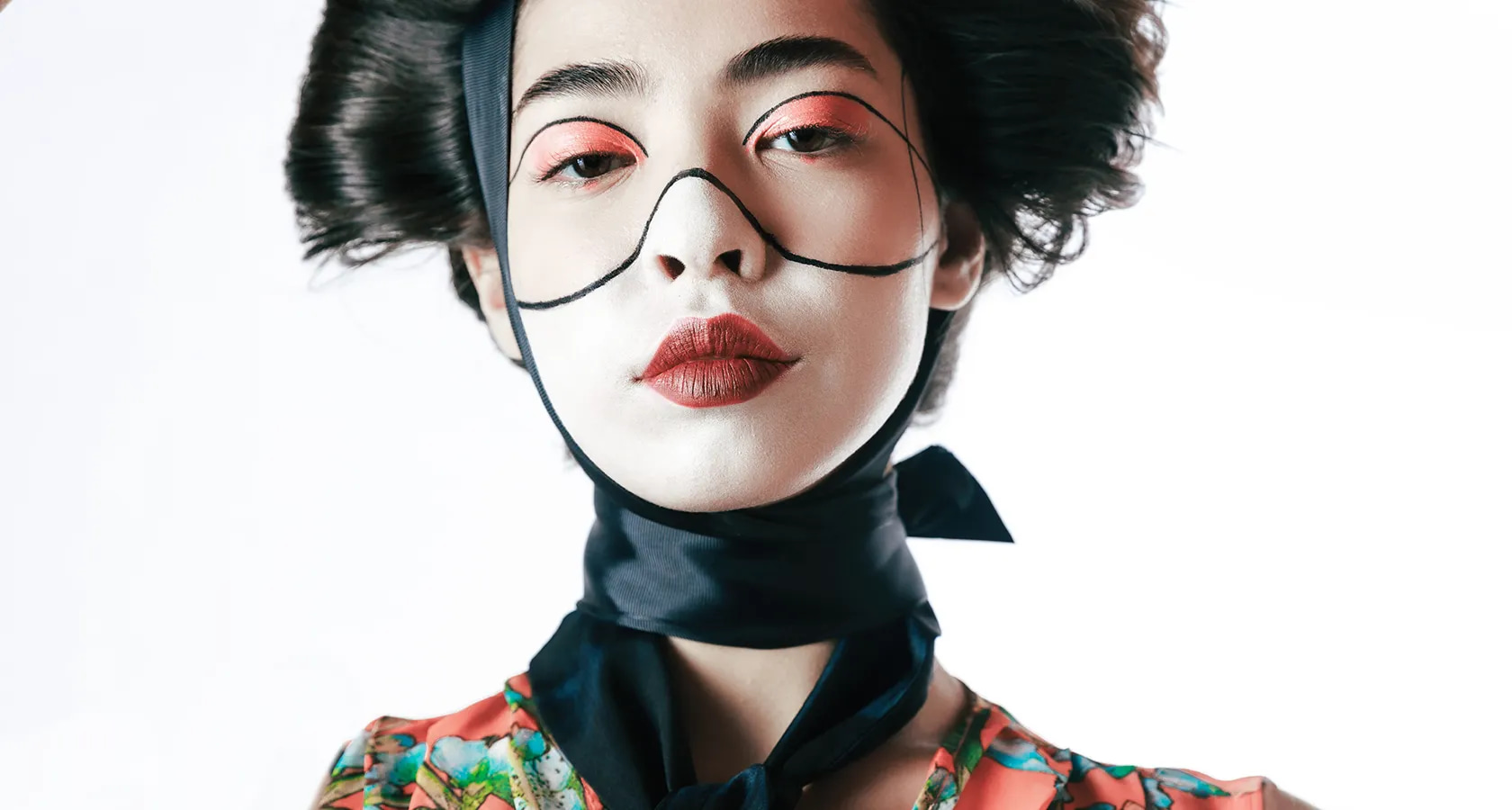
Fashion & E-commerce Photography in Belgium
High-end visual solutions for clothing, accessory, and beauty brands. From cinematic, storytelling lookbooks and editorial campaigns to clean, high-conversion e-commerce catalogs for your online store. We deliver imagery that elevates your brand identity and drives sales.
VIEW PORTFOLIOLookbook and Campaign Photography for Clothing Brands
Seasonal shoots planned so the second collection matches the first. Studio or location, in Brussels and across Belgium, with a campaign licence that covers paid advertising rather than stopping at your website.
A lookbook is not a one-off purchase. Every new collection is a new shoot, which makes it the most repeatable job in fashion photography — and that changes how the first one should be planned. Framing, light and treatment are decided in the first season so the second and third can match them. A brand that does this accumulates a visual archive; a brand that books a different photographer each season accumulates a folder of unrelated seasons.
What decides whether a shooting day works is settled before it starts: how many looks, how many changes per look, studio or location, and who is handling styling and hair. These four answers determine whether the agreed number of finished images is comfortable or impossible. They are worth an email at briefing rather than a discovery at three in the afternoon.
Models, stylist, hair and makeup and location fees are arranged separately and billed at cost. That is deliberate. You see what each element of the production actually costs instead of paying a single number with someone else's margin inside it, and you can cut or upgrade any one of them without renegotiating the whole shoot.
A twelve-month campaign licence is included, covering your website, social media and paid media. In fashion, advertising is the normal use of the images rather than the exception — a quote that leaves it out is not cheaper, it is incomplete.
We are a small brand. Is a full lookbook production justified?
It depends on whether you sell online. If a customer cannot touch the garment, the photograph is the product page, and it is doing the work of a shop assistant. If most of your sales happen in a physical store, a smaller session covering key pieces is usually the better allocation.
Our collection drops in three weeks. Is that enough time?
Usually yes for the shooting day itself. The constraint is rarely our calendar — it is model availability and sample delivery. If the samples are not finished, nothing else can be scheduled around them, so that is the first question to answer.
How do we know the images will look like our brand and not your portfolio?
Because the reference set is agreed before the day, not after. You send what you want it to look like, we say what is achievable within the planned time, and the framing and treatment are fixed at that point. A photographer who cannot describe the result in advance is asking you to fund an experiment.
Who arranges the models, stylist and location — and what if someone cancels?
We can arrange the full production or work with people you already use. Either way, each supplier is named and billed at cost. Cancellations are handled by having a defined fallback for the roles that can be replaced at short notice, agreed at briefing rather than improvised on the day.
Last season we shot on a phone and it looked fine. Why change?
If it sold, it worked, and that is the only honest measure. The moment it stops working is when you place those images next to a competitor's in the same feed or on the same marketplace. That comparison is made by the customer, not by you, which is why it is easy to miss.
Ghost Mannequin and E-commerce Clothing Photography
The garment keeps its shape, the mannequin disappears. Front and back for every piece, sized to your platform and consistent from the first item to the eightieth.
Included in Packshot & Catalogue — from 420€ · Full Listing Set — 290€ →
Ghost mannequin photography shows the shape of a garment without a person interpreting it. For an online shop that is a returns question before it is an aesthetic one: the customer sees how the item actually sits, not how it sits on one particular body. It is also faster and less expensive than a model production, which starts to matter as soon as a collection runs to several dozen pieces.
Consistency is the real deliverable. Eighty garments photographed across three days have to look photographed in one hour — same height in frame, same white, same shadow, same crop. That is set once as a template and applied to the whole set. It is the difference between a catalogue and a folder of photographs, and it is invisible until one listing is slightly off and the page looks amateur.
On artificial intelligence, the honest answer rather than the defensive one: this is one of the categories under genuine pressure, and forecasts point to a large share of clothing listings using generated imagery. Two things do not change. A generated image still starts from a real garment photographed properly, and returns are driven by the gap between the image and the parcel. A shop that generates too far from the original does not save money — it moves the cost from photography to logistics.
Garments arrive prepared or basic preparation is handled on site; heavily creased or structured pieces are worth a dresser, arranged at cost.
Eighty items sounds expensive. How is this priced?
Per garment, with a minimum quantity, not per day. That means the cost is predictable before you send anything and scales with the size of your catalogue rather than with how long the work takes me. You can also split a collection across two invoices by shooting the bestsellers first.
Our shop is already live with poor photographs. How fast can this be fixed?
A collection of around fifty pieces is normally two shooting days with delivery inside a week. If the listings are already selling, the sensible order is to reshoot the top sellers first and let the rest follow — the traffic is already on those pages.
How do we know all eighty garments will actually match?
Because the template is built before the first piece and not adjusted afterwards. You can ask any photographer for two frames from the same past catalogue, shot on different days, and compare them. That is a faster check than reading a portfolio.
Who supplies the garments, and what about steaming and sizing?
You send or drop off the pieces; basic preparation is included. Files come back in the dimensions your platform specifies, so nobody on your side resizes anything. If the platform requirements are unusual, they go in the brief — retrofitting a crop across a catalogue is the one avoidable expense here.
We are planning to use AI-generated images anyway. Why photograph at all?
Because generation needs a real reference to start from, and because the failure mode is a return rather than a bad review. Use generated variations for context and styling if it saves you time. Keep the base image real — it is the one the customer measures the parcel against.
Beauty Photography for Portfolios and Brands
Skin, texture and colour finished to campaign standard — for a makeup artist building a portfolio, an agency adding beauty frames to a model's book, or a brand photographing a product result.
Beauty photography takes about as long to shoot as a portrait and several times as long to finish. That is the whole economics of it, and it is worth stating plainly rather than hiding behind the word "premium". A beauty image is examined at full size — skin, texture, the edge of a lash line, the transition of a shade — and everything that a portrait can leave alone has to hold up under that inspection.
For a makeup artist or an agency, the image is the evidence. It has to show the work, not the retouching, which is a narrower target than it sounds: too little finishing and the frame looks unfinished, too much and the artist's work disappears into a smoothed surface. The line between those is the actual skill being paid for.
For a cosmetics brand, the deliverable is colour. If a shade photographs half a tone off, the image is unusable no matter how good it looks, so colour-critical work is checked against the physical product rather than judged on a screen. This is also the honest answer on generated imagery: an approximately correct shade is not an aesthetic preference, it is a returned parcel and a complaint about the product itself.
Makeup artist and model are arranged separately and billed at cost, whether you bring your own or ask us to find them.
Why does this cost more than a portrait session of the same length?
The retouching, and only the retouching. Shooting time is comparable; finishing is several times longer because the images are viewed at full size and are colour-critical. Any beauty quote priced like a portrait is either not doing that work or not costing it.
Our product launches next month. Does that fit?
Usually, if the makeup artist and model are settled early — those two calendars are the constraint, not mine. Bring the launch date to the first conversation so the retouching window is planned backwards from it rather than squeezed at the end.
How do we know the shade will be accurate?
Because it is checked against the physical product on the day, not approved on a screen afterwards. Send the actual item rather than a reference image. Screens disagree with each other; the product does not.
Do you provide the makeup artist and the model?
They can be arranged, or you bring your own — many clients here are the makeup artist. Either way they are billed at cost and named on the quote, so there is no hidden margin and no confusion about who is responsible for what on the day.
Our supplier already gave us product shots. Do we need our own?
If they are packshots on white, yes — those show the container, not the result. The image that sells a cosmetic is the one showing what it does on skin, and it is the one a supplier almost never provides.
Model Tests and Polaroids in Brussels
Digitals that are honest and a small set of finished frames that are not overworked — what agencies and casting directors actually open, delivered in days rather than weeks.
A test portfolio exists to show what a model looks like. That single sentence decides everything else about how the session is run. Heavy retouching defeats its only purpose: an agency that books from an over-processed book and meets a different face at the casting stops trusting the photographer, and the model pays for that.
So the session splits in two. The digitals — front, profile, back, full length — are delivered as they are, unretouched, because that is the point of them. A small, fixed number of frames is then finished cleanly for the book itself. Fixing that number in advance is not a limitation, it is what keeps the work honest and the turnaround short.
Two or three looks fit comfortably in a short session, which is what a test needs. More looks produce a book that says less, not more — scouts scroll, they do not study, and a book of forty images is read as indecision.
Both agencies and models book this directly: agencies for new faces, models to update a book before a season. Delivery is fast by design, because a casting deadline does not move to suit a retoucher.
I am paying for this myself. Is a paid test worth it against a free collaboration?
A free shoot costs you the schedule and the certainty. It happens when the photographer is available, the selection arrives when it arrives, and the frames serve their portfolio before yours. If you have time and no deadline, that trade is reasonable. If you have a casting, it is not.
I have a casting next week. Can the files arrive in time?
Yes — turnaround is short by design and stated before booking rather than estimated afterwards. Tell us the casting date at the first message; if it cannot be met, you will hear that immediately instead of the day before.
Will agencies accept these digitals?
They are shot to the standard format agencies request — front, profile, back, full length, neutral, unretouched. If your agency has its own specification sheet, send it and the session follows it exactly. That is a five-minute conversation that prevents a reshoot.
Who books this, the agency or the model?
Both, and the difference matters mainly for the invoice. Agencies book for new faces and receive the files directly; models book for themselves and hold their own usage. Portfolio, agency use and social media are covered either way.
I already have photographs from a shoot last year. Is that enough?
If your appearance has not changed — length of hair, weight, anything visible — probably yes. Digitals age faster than a portfolio does, because their entire value is being current. A book from last year with digitals from last year reads as unavailable rather than experienced.
Street and Editorial Fashion Photography
Editorial series shot on location in Brussels — the format published by fashion magazines, and the one that proves a brand can be art-directed rather than simply photographed.
Editorial is the part of fashion photography with a narrative. A lookbook shows the garment; an editorial shows a situation the garment belongs to, shot on location, with a point of view that survives being printed next to someone else's. It is the format magazines publish, which is why it is also the format that demonstrates art direction rather than describing it.
Work of mine in this format has been published in five magazines — MALVIE, 17.23, Trend Privé twice, and Shuba. That matters less as a credential than as a check you can run yourself: an editorial page is judged by an outside editor with nothing invested in the outcome, which is a harder filter than a portfolio a photographer curates.
For a clothing brand, editorial does a job that catalogue images cannot. It gives the brand a register — a street, a light, a kind of person — that carries across a season and gives paid social something other than product on white. For an agency, it is how a model's book stops looking like a series of tests.
Sessions are billed by the hour with a minimum, because the work varies too much to package honestly: three hours in one street is a different job from three hours across three locations with changes. The hourly structure keeps the variation visible instead of hiding it behind a vague starting price.
Editorial budgets are small. Can this be done at our scale?
Yes, because it is billed by the hour with a minimum rather than as a production package. A short session in one location with one model is a real editorial, and it is where most brands should start. The cost scales with locations and changes, which are the two things you control.
We need content this month. How much can one session produce?
Enough for a season of social posts if the brief is narrow. The mistake that wastes an editorial day is trying to cover three concepts — the output drops and none of them is finished. One idea shot properly outlasts three shot partially.
How do we know you can actually deliver an editorial look?
Five published series in fashion magazines — MALVIE, 17.23, Trend Privé twice, Shuba. Ask any photographer for published work rather than portfolio selections; publication means someone outside the shoot approved it.
Who owns the images, and what about the model?
Usage is defined in writing before the shoot, including whether the images can run in paid advertising. Model releases are handled at the same time, not afterwards — a series you cannot use commercially because nobody signed anything is the most common way an editorial budget is wasted.
We already work with influencers. Is that not the same content?
It is different content doing a different job. Influencer material borrows someone else's audience and register; editorial builds your own, and it stays yours when the collaboration ends. Most brands need both, but only one of them accumulates.
Our Workflow: Streamlined Efficiency Without Sacrificing Quality
-
Pre-Production
Before we even pick up the camera, we define the vision of the project. Moodboarding (setting the tone, style, color palette, and overall vibe), location scouting (choosing the ideal environment for the shoots in Belgium or abroad), and team setup (recommending the best local makeup artists and stylists if necessary).
-
Shooting
A lookbook and catalog require not just posing, but acting. I actively work with models to produce authentic facial expressions and kinetic movement. I combine natural light with professional studio equipment to create images that look high-end, editorial, and effortless.
-
Post-Production
Lookbook and beauty retouching include custom cinematic color grading and magazine-quality high-end skin and fabric processing. For catalogs, we provide quick color correction, basic natural retouching, and cropping/resizing tailored to your platforms. Fast turnaround times are guaranteed.
Lookbook and campaign, e-commerce and ghost mannequin, model tests, beauty and editorial — planned so this season matches the last instead of starting over every time. Tell us the number of pieces or looks and the date it has to be live: fixed quote the same day, no meeting required first.
Why is Professional Fashion Photography Important?
Lookbook and catalog photography is not just the process of showcasing products; it is the creation of an image that will be remembered and noticed. Good photography brings collections to life, engages the customer, reduces return rates, and prompts them to take action. If you are looking to create a visual presentation that will help embody the spirit of your brand and set it apart, I am ready to assist you. Let's meet in Brussels or online and develop a photoshoot concept that will interest your audience and completely align with your brand's identity.
Your Visuals Sell Before You Say a Word
A lookbook that says nothing about your brand costs more than it earns, and a badly lit catalog turns straight into returns. Whether you're launching a collection, refreshing your e-commerce catalog, shooting a beauty campaign, or building a model's book, every session is calibrated for how the images will actually be used — sales, brand identity, or agency signing. Tell me about your collection and where the images need to live, and I'll put together a tailored shoot plan.