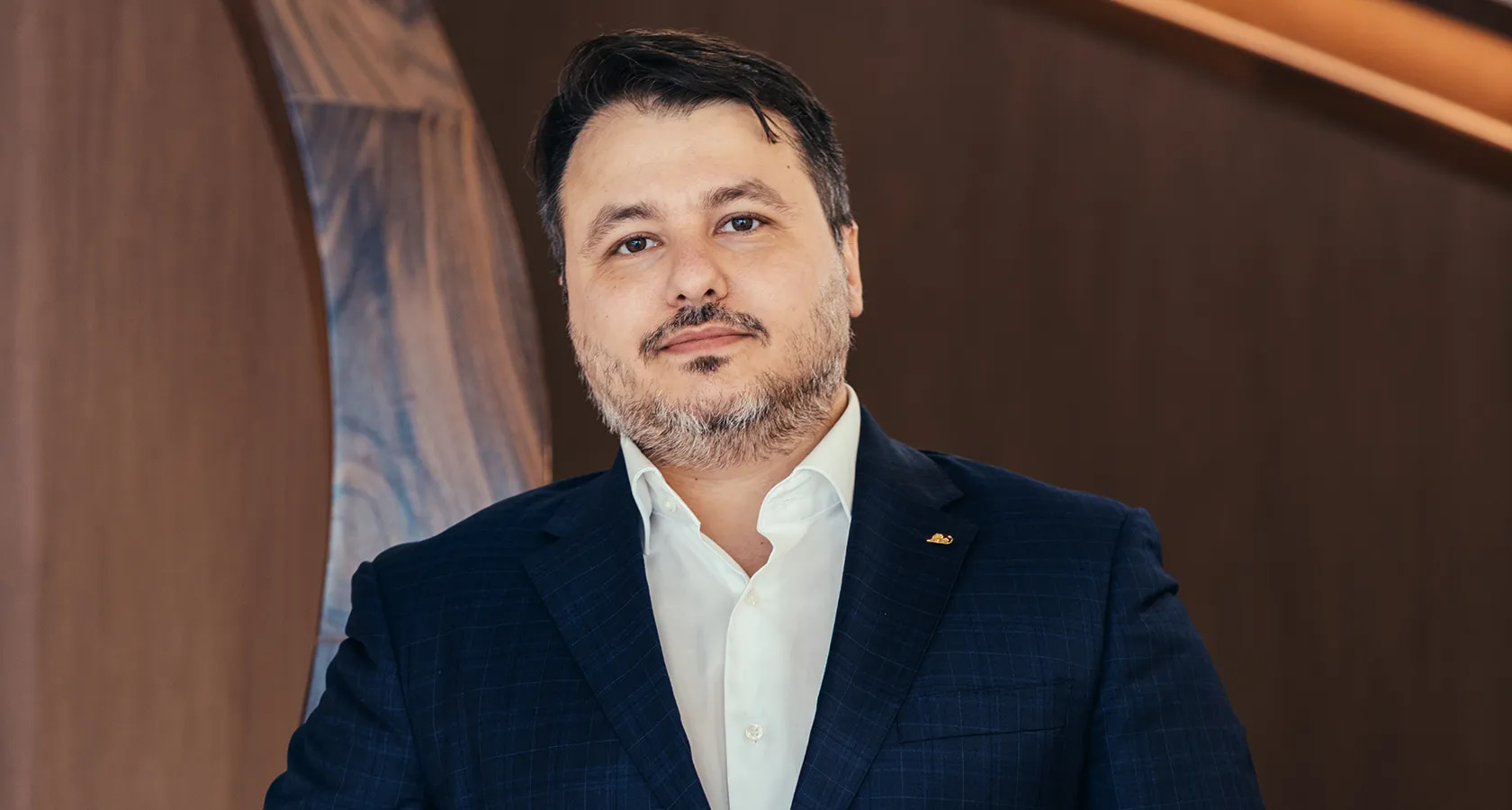
Corporate Photography in Brussels
In business, people trust faces before they trust brands. Whether it is a LinkedIn headshot, a set of leadership portraits, or full coverage of your annual conference — we create polished, on-brand images that build trust, convey authority, and open doors. Based in Brussels, working across Belgium.
VIEW PORTFOLIOHeadshot Day: A Studio in Your Office for a Day
A mobile studio set up in your meeting room. Each person is photographed in about fifteen minutes and back at their desk. One day covers a team of twenty to forty, and everyone ends up with portraits that look like they belong to the same company.
Most companies do not have a portrait problem. They have a consistency problem. One person has a photograph taken at a conference, another used a holiday picture, a third has nothing at all — and the leadership page looks like a collage of different organisations. A Headshot Day solves it in a single pass. We arrive before the first slot, build a full studio setup in a meeting room, and work through the schedule your office manager has prepared. Fifteen minutes per person, including the two minutes most people need to stop feeling awkward. Identical lighting, identical background, identical treatment — so the twentieth portrait matches the first. The result is a set your communications team can use for the website, LinkedIn, press releases and internal directories without adjusting anything. New hires are added later in a short follow-up session using the same setup, so the look does not drift over the year. Works across Brussels and Belgium, in English, French or Russian, in your offices or a rented space if your meeting rooms are small.
How much does a headshot day for a team of 30 cost?
The day rate depends on how many people are photographed and how much retouching each portrait needs, not on how long we stay. A team of thirty is a standard single day. You receive a fixed quote before anything is confirmed — there is no per-hour drift and no invoice surprises.
How long does each employee spend away from their desk?
About fifteen minutes, including changing a jacket and a first look at the screen. Your office manager gets a slot schedule in advance, so nobody waits in a corridor and nobody's morning is blocked.
What if an employee does not like their photograph?
They choose their own frame on the spot, on the screen, before we move on. Nobody leaves with a portrait they have not approved. If someone is genuinely uncomfortable being photographed, they are not pushed — that is between them and you, not something a photographer should force.
What does the company need to prepare?
A room with a free wall of about three metres, one power socket, and a slot schedule. We send a short note to circulate to the team about what to wear — this single step improves the result more than any equipment does.
We had headshots taken last year. Why redo them?
If nobody has changed role, joined, or changed how they look, you probably do not need to. In practice a company of thirty changes about a fifth of its team a year, which is exactly how the collage effect starts again.
LinkedIn Headshots for One Person
A single portrait when one person needs it now — a new hire, a promotion, someone about to be published — shot in the same setup as the rest of your team so it does not look added later.
Companies rarely need everyone photographed at once. What happens far more often is that one person needs a photograph this week: someone has just joined, someone has moved into a client-facing role, or a journalist has asked for a portrait by Friday. Waiting for the next company-wide session means that person spends months representing you with a holiday snapshot or nothing at all — during the exact period when they are most visible.
This is that session: one person, a short slot, no minimum headcount and no need to gather anyone. It is booked for a single name and invoiced to the company, which is the practical difference from an employee arranging it privately.
The part that matters technically is matching. If your team was photographed before, the setup from that session is reproduced — same light, same distance, same background, same retouching profile — so the new portrait sits on the team page without announcing that it was taken two years later. If there is no earlier session, this one becomes the reference for everything that follows.
Delivered in the crops LinkedIn, a CV and an internal directory each require, plus a version that still reads at thumbnail size. Retouching stays restrained: the person walking into the meeting should be recognisably the person in the photograph.
Is it worth booking a photographer for a single person?
If that person is client-facing, being published, or newly promoted, then the alternative is not "no photograph" — it is a bad one, used everywhere for the next two years. For a whole team the day rate is the sensible unit; for one person it is not, and it should not be priced as if it were.
They start Monday. How quickly can this happen?
A single slot is short and easy to place, so timing is usually a question of their calendar rather than ours. A first selection comes back quickly for approval, which matters when the profile has to go live the same week.
How will one portrait match the ones we already have?
Because the earlier setup is written down rather than remembered: lighting positions, distance, background and retouching profile. That is the whole reason it can be reproduced a year later. Send one existing portrait as reference and it will be matched to it.
Who chooses the final image — us or the employee?
The person photographed, on the spot, on screen. It takes a minute and it prevents the common outcome where HR distributes a portrait and the employee quietly never uses it.
We are planning a team session anyway. Should we just wait?
If it is weeks away, yes — wait and save the trip. If it is a vague plan for next year, no: the cost of waiting is paid by whoever currently has no usable photograph, and that cost is invisible until you look at your own team page.
Executive and Leadership Portraits
Portraits of the people whose faces carry the company externally — for the leadership page, the annual report, press releases and conference programmes.
An executive portrait carries a different job from a team headshot. It is reproduced larger, it appears in contexts you do not control, and it is often the only image a journalist or an event organiser has of your company.
That changes the requirements. The frame needs deliberate empty space so a layout designer can place text over it. It needs a horizontal version, because programmes and article headers are horizontal. It needs enough resolution to survive print. And it needs to be neutral enough to work whether it appears against a dark brand or a light one.
In practice the session is short — senior people rarely have an hour. We work in a compressed format: a defined set of frames, shot in a fixed sequence, in the office or in a studio. What takes time is not the photography but agreeing beforehand where the portrait will appear, because that determines the framing.
Delivered with usage rights for corporate communications and press, so nobody has to ask permission before a publication.
How long does an executive session take?
Between twenty and forty minutes on site, depending on how many contexts the portrait has to serve. Shorter is possible if the brief is defined in advance.
Can it be done in our office rather than a studio?
Yes, and it is usually better. A portrait taken in the actual working environment is harder to date and reads less like a stock image. We bring lighting, so the room does not need windows.
Can we use these photographs in the press without asking each time?
Yes. Usage rights for corporate communications and press are included, stated in writing. This is worth checking with any photographer before booking — it is the clause that most often causes trouble later.
Our CEO does not like being photographed. What then?
That is normal and it is workable. A short, structured session with a defined shot list is far easier for a reluctant subject than an open-ended creative shoot. Knowing it will be over in twenty minutes changes how people sit.
We already have portraits. When do they need updating?
When the role changes, the company rebrands, the person's appearance visibly changes, or roughly every three to four years. The most common trigger is none of those: someone else published a photograph and the leadership team did not like it.
Team and Group Portraits
The whole team in one frame — for the About page, a proposal, or a recruitment campaign. Coordinated so it does not look like a school photograph.
Included in Headshot Day — from 690€ · Corporate Day — from 1 090€ →
A group portrait is a logistics problem disguised as a photographic one. Getting eighteen people in the same room at the same time is harder than lighting them, and the difference between a good result and an awkward one is decided before anyone picks up a camera.
We work with a fixed plan: a defined position for each person, a arrangement that reads at the aspect ratio your website actually uses, and a short sequence so the group is not standing around losing patience. Fifteen minutes of group time is usually enough when the setup is already built.
Two versions are worth having and are shot in the same slot: the formal arrangement for the website and proposals, and a looser working frame that suits recruitment content and social posts. The second one dates more slowly.
If the team is distributed across offices, the portraits can be built to combine — same light, same background, photographed separately and assembled.
What does a team photograph cost compared to individual headshots?
A group frame is a single setup, so it is not priced per person. Most companies book it alongside individual portraits in the same visit, which is the cheaper way to get both.
How long do we need to have everyone available?
Fifteen to twenty minutes of everyone's time, in one block. We arrive earlier to build the setup so that block stays short.
Someone is always missing. Can they be added afterwards?
Yes, if it is planned rather than discovered later. The same lighting and background are documented, the missing person is photographed separately and composited. It works when the intent exists from the start.
Where should this be taken — office or studio?
The office, unless there is no room with a free wall of about four metres. An office frame supports a recruitment message; a studio frame looks more formal and dates faster.
Our team changes constantly. Is a group photo worth it?
If more than a quarter of the team turns over each year, a formal group portrait is a poor investment and individual portraits assembled into a grid serve you better. That is worth deciding before booking, not after.
Employer Branding Content
Images of how your company actually works — for the careers page, job adverts and recruitment campaigns. The material candidates look at before they apply.
Candidates research an employer the way buyers research a supplier: they look before they contact. A careers page illustrated with stock photography tells them the company either has nothing to show or did not think it mattered.
Employer branding photography is not a portrait session. It is a half or full day of documenting real working situations — a meeting that was going to happen anyway, the space people actually sit in, the informal moments that make an office recognisable. Staged enthusiasm is visible instantly and works against you.
The output is a library rather than a single image: enough frames to run a careers page, a series of job adverts and several months of recruitment posts without repeating the same photograph. That is usually what makes the difference between shooting once and shooting again every quarter.
Sessions are planned around your calendar so nothing has to be invented for the camera.
How is this different from ordinary corporate photography?
Corporate photography answers "who works here". Employer branding answers "what is it like to work here". The second requires time on site rather than a lighting setup, which is why it is priced by the day.
How many images do we actually get?
Enough to run a careers page and several months of recruitment content without repetition. A precise number is agreed in the brief, because it determines the retouching volume.
Do our employees have to agree to appear?
Yes, and it should be handled before the day, not on it. We provide a short consent note you can circulate. Under GDPR this is your responsibility as the employer, and it is easier to solve in advance than to remove someone from a published campaign afterwards.
Our office is not photogenic. Is this worth doing?
Usually yes, and the concern is misplaced. Candidates are not comparing your office to an architecture magazine, they are checking whether it looks like a real place with real people. A polished space is often less convincing than an ordinary one.
We are not hiring right now. Why do this today?
Because the material takes a day to produce and months to accumulate results. Commissioning it when a vacancy is already open means the advert goes out with whatever exists, which is usually nothing.
Press and Media Headshots
High-resolution portraits prepared for journalists, conference programmes and press kits — in the formats media actually request.
When a journalist asks for a photograph, the deadline is short and the request is specific: high resolution, a horizontal option, and something that will not look dated next to the article. Companies that do not have this send whatever exists, and the publication runs a cropped LinkedIn thumbnail.
A press set is prepared once and used for years. It contains a vertical portrait, a horizontal frame with intentional space for overlaid text, a version on a neutral background that works against both light and dark layouts, and files at print resolution. The point is not artistic ambition — it is removing the twenty minutes of panic when a request arrives at four in the afternoon.
For companies with spokespeople or conference speakers, the same session covers both press and event programme requirements, since the technical demands overlap almost completely.
Delivered with written usage rights, so your communications team can send a link rather than negotiate permission.
What is included in a press set and why does it cost more than one portrait?
Because it is not one portrait. It is a defined set of formats — vertical, horizontal with text space, neutral background, print resolution — each requiring its own framing and treatment. You are buying coverage of every request you might receive, not a single image.
How fast can we get files when a journalist asks?
Immediately, if the set already exists. That is the entire purpose. Producing it on demand is the situation this is designed to prevent.
Can we send these to media without checking with you?
Yes. Press and editorial usage is included in writing. You should confirm this with any photographer before commissioning — it is the most common source of disputes.
Our spokesperson is not a public figure. Do we need this?
If anyone in the company might be quoted, interviewed or listed in a programme, then yes. The cost of not having it is not money — it is a badly cropped photograph published under your company name.
We have a photo from a conference. Is that enough?
It is enough until it is not. A conference photograph is usually low resolution, badly lit and shows a lanyard. It works for a social post and fails for print.
Our Workflow: From Brief to Delivery
-
Brief & Consultation
We start with a discovery call or written brief to understand your goals, brand identity, and the story you want to tell. We align on style, mood, locations, and deliverables — so there are zero surprises on the day.
-
The Photo Session
On the day of the shoot, we arrive prepared and professional. Whether it's a studio portrait session, an on-location event, or a multi-hour corporate reportage — we guide and capture without disrupting your flow.
-
Editing & Delivery
High-end retouching and colour grading delivered within 48–72 hours via a private online gallery. You select your favourites, we finalise the files in the formats you need — web, print, or social media.
Headshot days, LinkedIn and executive portraits, team frames, employer branding and press kits — planned as one system instead of booked one at a time, so the twentieth portrait still matches the first. Tell us how many people and by when: you get a fixed quote the same day, no meeting required first.
Turning your ideas into powerful visuals.
Every business has a unique story to tell. Let's discuss your vision and deliver photos that genuinely reflect your brand's character.